

♥ Wishlist
Compare 20 Makita Hedge Trimmer for Australian Gardens and Hedges products in Australia. Reviews, ratings, pros, cons and buying advice updated for October 2026.


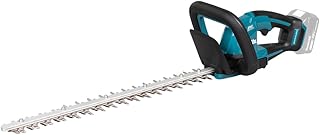


Choosing an advanced Makita hedge trimmer is less about selecting the machine with the biggest headline specification and more about matching the tool's cutting system, battery platform, blade length, ergonomics and intended workload to the hedge you actually maintain. Australian gardens can range from small suburban boundaries to long, established hedges and larger properties, so the most suitable configuration can vary considerably.
For 2026 buyers, the Makita range includes compact 18V LXT hedge trimmers, higher-capacity brushless models, 40V Max XGT equipment and pole-mounted solutions. Some models are supplied as tool-only skins, while others may be offered as kits containing batteries and a charger. Always check the exact model designation and package contents before comparing prices because a lower-looking tool price may not represent the complete setup required for use.
The most useful comparison is therefore not simply “which Makita hedge trimmer is best?” but “which Makita hedge trimmer provides the right combination of reach, cutting capacity, runtime, handling and platform compatibility for my garden?”
The 18V LXT platform is particularly relevant to buyers who already own compatible Makita batteries. A single battery platform can reduce the need to purchase a separate power system for every outdoor tool, provided the selected hedge trimmer is compatible with the batteries already in your collection.
Makita's Australian range includes compact and larger 18V brushless hedge trimmers. For example, the DUH507 is a 500mm hedge trimmer designed around the 18V platform, while models such as the DUH752 extend the cutting length to 750mm. These differences matter because a longer blade can cover more hedge surface per pass, but it can also affect balance and manoeuvrability.
Brushless motor technology is another important consideration. Brushless systems can provide efficient power delivery and eliminate the conventional motor brushes used in brushed designs. However, “brushless” should not automatically be interpreted as meaning that every model is appropriate for every hedge. Blade design, cutting diameter, motor control, battery condition and the thickness and type of vegetation remain important.
The 40V Max XGT platform is aimed at applications where greater power capability and a more substantial outdoor-tool ecosystem are desirable. XGT models should be evaluated as part of the complete XGT platform rather than as isolated hedge trimmers.
This is especially important for buyers who already use XGT equipment. Existing batteries and chargers can influence the overall cost of ownership and may make one model family considerably more practical than changing platforms.
When comparing LXT and XGT, look beyond voltage alone. Consider hedge size, branch thickness, cutting frequency, expected runtime, total tool weight, battery investment and the other cordless equipment you expect to purchase in the future.
A pole hedge trimmer solves a different problem from a conventional hedge trimmer. Instead of holding the motor and cutting head directly in front of the body, the extended shaft provides additional reach for taller hedges and difficult-to-access sections.
Makita's Australian accessory range includes pole hedge trimmer solutions such as the DUN461W, DUN501W and UN001G, as well as attachment-based equipment such as the EN402MP 500mm pole hedge trimmer attachment. The EN402MP, for example, has an adjustable cutting head with multiple angle positions, which can be useful when shaping the top or side of a hedge from a safer working position.
Reach should never be assessed in isolation. A longer tool can reduce the need for a ladder in some situations, but it can also increase leverage and fatigue. A model that looks ideal on paper may be uncomfortable if it is too heavy or poorly balanced for the particular hedge being maintained.
Blade length is one of the easiest specifications to compare and one of the easiest to misunderstand. A longer blade does not automatically make a hedge trimmer better.
For example, Makita's Australian documentation identifies 500mm, 600mm and 750mm cordless hedge trimmer configurations across its range. The right choice depends on whether speed of coverage or precise control is the more important requirement.
Cutting capacity describes how substantial the vegetation can be for which the tool is designed. This specification should be treated as a guide rather than an instruction to force the tool continuously through material at the maximum stated diameter.
Thin new growth, soft foliage and dense woody stems place different demands on a hedge trimmer. A hedge that has been regularly maintained can therefore behave very differently from one that has been allowed to become overgrown.
Before buying, inspect the hedge itself. Measure or estimate the thickest stems you realistically expect to cut. If the hedge contains many branches that are substantially thicker than the trimmer's stated cutting capability, a dedicated pruning saw, lopper or chainsaw may be more appropriate for preparatory work.
Brushless motors are a significant feature across Makita's higher-specification cordless outdoor equipment. They avoid the mechanical brushes found in traditional brushed motors and can be designed for efficient electronic control.
For the buyer, the practical benefits to investigate include power delivery, efficiency, motor control, tool durability and how the motor behaves under changing cutting loads. Do not, however, use the brushless label as a substitute for reading the complete specification.
A well-matched 18V brushless hedge trimmer can be a better purchase for a homeowner with moderate hedge maintenance than a substantially larger system that adds unnecessary weight and battery expense.
Cordless convenience is one of the main reasons to consider Makita hedge trimmers, but battery selection can materially affect the experience. Runtime depends on battery capacity, vegetation density, cutting resistance, operating technique, temperature, battery condition and the specific tool.
Do not assume that a stated runtime figure will apply equally to every hedge. Manufacturer runtime measurements are normally associated with particular test conditions, battery configurations and operating patterns. Dense foliage and thicker branches can consume substantially more energy than light trimming.
A tool-only Makita hedge trimmer can be attractive when you already own compatible batteries and a charger. It can be less attractive if you are entering the platform for the first time and must purchase those components separately.
When comparing offers, calculate the complete cost:
This approach produces a more meaningful comparison than comparing tool-only prices against complete kits.
Hedge trimming is repetitive work. A machine that feels manageable for five minutes can feel very different after an extended session, particularly when the cutting head is raised above shoulder height.
Evaluate the handle arrangement, trigger position, rear-handle adjustment, balance between the battery and cutting head, vibration characteristics and ease of changing your working angle.
Makita's larger cordless hedge trimmer designs can include features intended to improve handling. For example, the DUH752 documentation identifies a rotating rear handle with five set positions and an anti-vibration structure. Features like these are relevant because hedge trimming involves repeated directional changes rather than a single straight cutting motion.
Two machines with similar stated weights can feel substantially different because of where the weight is positioned. A forward-heavy hedge trimmer places more demand on the arms and shoulders, while a better-balanced tool may feel easier to guide.
For taller hedges, pole models introduce another consideration: leverage. The further the cutting head is from your body, the greater the effort required to control the tool. This makes harness compatibility, shaft design and working technique particularly important.
A conventional hedge trimmer with a fixed cutting arrangement is usually straightforward and well suited to regular side and top trimming. An adjustable head becomes more valuable when the hedge has different faces, varying heights or awkward angles.
Pole hedge trimmers can offer several head positions, allowing the operator to alter the cutting angle without continuously changing body position. This can be especially useful for shaping the top surface of a tall hedge.
When comparing adjustable models, check how the adjustment mechanism works, how many positions are available, whether the head locks securely and whether changing positions is practical during normal garden maintenance.
The DUH507 is a 500mm 18V cordless hedge trimmer that represents a practical size for buyers who want a relatively compact cutting platform. Makita's Australian specification material identifies a 15mm maximum cutting diameter and a lightweight configuration with battery.
This type of model is worth considering when manoeuvrability is more important than maximum blade coverage. It can make sense for regular residential trimming where the hedge does not require the longest available blade.
A 600mm configuration such as the DUH602 sits between compact 500mm equipment and the longest 750mm hedge trimmers. It can appeal to buyers looking for additional cutting coverage while retaining a more conventional hedge-trimmer format.
Check the exact battery requirements, included equipment and current Australian specification before purchase because package configurations can differ between sellers and product versions.
The DUH752 is a 750mm 18V brushless hedge trimmer designed for buyers who value a longer cutting surface. Its Australian documentation identifies a maximum cutting diameter of 21.5mm and a rotating rear handle with five set positions.
A 750mm blade can be particularly useful on long hedge faces because more area can be addressed during each pass. However, its larger cutting envelope should be balanced against the physical demands of controlling a longer tool.
The DUN461W and DUN501W belong to the pole hedge trimmer category. These models should be evaluated primarily by buyers who need additional reach rather than simply looking for the highest cutting performance.
Pole equipment can be valuable for tall hedges and hard-to-reach areas, but it should be chosen with particular attention to total tool length, balance, operating position and the amount of time the machine will be held away from the body.
The UN001G represents the 40V Max XGT approach to pole hedge trimming. Buyers already invested in the XGT ecosystem may find platform compatibility an important part of the decision, particularly when several outdoor power tools are planned.
As with every cordless outdoor tool, compare the complete configuration rather than focusing solely on voltage. Battery availability, charger ownership, tool weight and actual hedge requirements remain decisive.
A useful ranking should not treat every hedge trimmer as competing for exactly the same job. Instead, compare models according to the role they are designed to perform.
A 750mm hedge trimmer may look superior to a 500mm model in a specification table, but the longer blade is not automatically the better choice. If your garden contains narrow sections, curved hedges or low ornamental shrubs, a shorter machine may be easier to control.
Voltage can help distinguish battery platforms, but it does not tell the complete performance story. Motor design, blade construction, cutting capacity, battery capacity and tool geometry all influence the practical result.
If you already own Makita batteries, platform compatibility should be one of the first filters. Buying into a second battery system unnecessarily can increase the total cost of ownership and add another charger and battery format to maintain.
Always determine whether a listing includes the battery and charger. A tool-only price can look significantly cheaper until the cost of the missing components is added.
A recently maintained hedge with thin growth has very different requirements from an overgrown hedge containing mature woody stems. If substantial branches need to be removed, prepare the hedge with an appropriate cutting tool before using the hedge trimmer for finishing and shaping.
Accessories can influence the long-term ownership experience. Makita's Australian accessory information includes chip receivers for several hedge trimmer and pole hedge trimmer models, as well as maintenance products such as lubricant and gearbox grease. Confirm compatibility with the exact model rather than assuming accessories are interchangeable across the entire range.
Regular maintenance helps preserve cutting performance and makes it easier to identify developing problems before the next major trimming session.
Makita's Australian maintenance documentation specifically identifies hedge trimmer accessories and maintenance products, including Clean-N-Lube spray lubricant and outdoor power equipment gearbox grease. Always follow the current instructions supplied for the exact model.
Technique affects performance just as much as equipment selection. Avoid forcing the blade through vegetation that exceeds the tool's intended cutting capability. Allow the cutting teeth to do the work and use steady, controlled movements.
For shaping a hedge, establish the desired profile before attempting to remove large amounts of material. Frequent light trimming is generally easier on both the operator and the tool than allowing excessive growth to accumulate and then attempting to remove it in a single session.
When working on the top of a hedge, pay particular attention to your stance and the angle of the cutting head. A pole trimmer can improve reach, but it should not encourage an unstable working position.
Hedge trimmers contain rapidly moving cutting blades and should be treated as serious cutting equipment. Read the model-specific operating instructions before use and wear the protective equipment recommended by the manufacturer.
For Australian properties, also consider local council requirements and practical restrictions concerning noise, vegetation removal and working around shared boundaries or public areas.
Makita is not the only established manufacturer competing in cordless outdoor power equipment. Buyers may also encounter hedge trimmers from brands such as DeWalt, Milwaukee, Bosch, EGO, Ryobi, STIHL and Husqvarna.
The most useful comparison is ecosystem-specific. If you already own several Makita LXT or XGT tools, staying within the same battery platform can be more convenient than selecting a theoretically stronger standalone machine from another brand.
Conversely, a buyer starting from zero should compare the complete outdoor-tool ecosystem. Consider batteries, chargers, hedge trimmers, blowers, chainsaws, line trimmers, lawn mowers and other tools that may eventually form part of the same collection.
There is no universal winner between LXT and XGT. The better platform is the one that matches your existing equipment, workload and future outdoor-tool requirements.
Customer reviews can provide useful information, but they should not be treated as a substitute for specifications. Look for repeated observations rather than relying on a single enthusiastic or negative comment.
Useful review themes include battery consumption, handling, balance, blade performance, ease of cleaning, suitability for tall hedges, vibration, noise and long-session comfort.
Pay attention to whether reviewers describe the same type of garden you have. A homeowner maintaining a short ornamental hedge has different requirements from a property owner trimming hundreds of metres of established vegetation.
For a small Australian suburban garden, a compact 18V model can be a sensible starting point. The priority should be low effort, easy storage, sufficient cutting capacity and compatibility with batteries you already own.
A 500mm model such as the Makita DUH507 is worth investigating when a manageable cutting envelope is more useful than the maximum available blade length.
For long hedge runs, a longer blade can reduce the number of passes required to cover a given surface. A 600mm or 750mm model may therefore be more attractive, provided its weight and balance remain comfortable for the operator.
The Makita DUH752 is an example of the 750mm category. Its longer cutting length makes it particularly relevant to buyers comparing maximum coverage, but the physical size should be considered alongside the specification sheet.
For tall hedges, a pole hedge trimmer deserves consideration because reach becomes more important than simply increasing blade length. Models such as the DUN461W, DUN501W and UN001G can be evaluated according to the height and shape of the hedge, required cutting angle and battery platform.
Do not select a pole trimmer solely because the hedge is tall. Consider whether the additional reach genuinely improves your working position and whether the tool can be controlled comfortably throughout the job.
Existing Makita users should begin the buying process by identifying their battery platform. If your shed already contains compatible LXT batteries, an 18V hedge trimmer can potentially integrate into the equipment you already own. If your equipment is built around XGT, an XGT hedge trimmer or pole solution may be the more logical long-term choice.
This ecosystem approach is one of the strongest reasons to evaluate cordless garden equipment as a collection rather than as individual products.
A hedge trimmer is often only one component of a wider garden maintenance setup. A complementary collection might include a blower for clearing clippings, a line trimmer for lawn edges, a chainsaw or pruning tool for larger branches, and mowing equipment for lawn maintenance.
Using compatible battery platforms can simplify charging and storage. Before expanding, identify which jobs you perform most often and purchase tools around those requirements rather than collecting equipment based solely on headline specifications.
Australian gardens can present very different hedge-maintenance conditions depending on region. Hot and dry conditions can place additional demands on batteries and operators, while humid environments can increase the importance of cleaning and proper storage.
Plant species also matter. Fine-leaved hedges, dense shrubs and woody growth can produce different cutting loads. Before purchasing an advanced hedge trimmer, identify the dominant plants in the hedge and the typical thickness of the growth you need to control.
Good storage reduces unnecessary wear and helps keep the equipment ready for the next trimming session.
An advanced hedge trimmer is designed primarily for hedge maintenance and shaping. It is not a universal replacement for every garden cutting tool.
If the job involves large woody branches, heavy pruning or material outside the machine's intended cutting range, use equipment specifically designed for that task. Attempting to force an unsuitable hedge trimmer through oversized material can compromise cutting performance and increase the risk of kickback, jamming or damage.
There is no single best model for every Australian garden. The right choice depends on hedge size, cutting thickness, required reach, blade length, battery platform, working duration and personal comfort. A compact 18V model may be ideal for one homeowner, while a 750mm brushless or 40V Max XGT pole solution may be more appropriate for another.
For many residential hedge-maintenance applications, an 18V Makita hedge trimmer can be entirely appropriate. The important factors are the specific model, blade length, cutting capacity, battery configuration and type of vegetation being cut.
Neither is universally better. A 500mm blade can provide easier handling and good control, while a 750mm blade can cover a larger hedge surface per pass. Choose according to hedge dimensions and your ability to handle the tool comfortably.
Makita offers brushless hedge trimmer models, including 18V configurations. However, not every Makita hedge trimmer should be assumed to have identical motor technology. Always verify the exact model specification.
Battery compatibility depends on the Makita platform and the specific tool. LXT and XGT are distinct systems, so buyers should check the exact battery requirements rather than assuming that every Makita cordless battery fits every Makita cordless tool.
If you already own compatible batteries and a charger, a tool-only skin may be practical. If you do not own the required battery system, compare the cost of a complete kit against buying the components separately.
Around 500mm can be a versatile choice for many residential applications, while 600mm and 750mm options may be useful for larger hedge faces. The best length is the one that provides adequate coverage without making the tool unnecessarily difficult to control.
They can be particularly useful for tall hedges, deep shrubs and difficult-to-reach sections. Their value depends on whether additional reach improves your working position enough to justify the extra length and leverage.
Compare the complete configuration rather than the advertised tool-only price. Include the cost of batteries, chargers and essential accessories where required. Also compare the exact model number because apparently similar products can have materially different specifications.
Basic cleaning and inspection should be performed regularly, particularly after heavy trimming. Blade lubrication, inspection and other maintenance should follow the manufacturer's instructions for the exact model.
No. Higher-voltage platforms can provide access to different performance characteristics and tool designs, but the best hedge trimmer is determined by the complete combination of cutting capacity, blade length, battery system, weight, ergonomics and workload.
The strongest way to choose among advanced Makita hedge trimmers in Australia is to start with the hedge rather than the product name. Measure the height and length, identify the thickest growth, determine whether you need ground-level or extended reach, and then narrow the options according to your existing Makita battery platform.
For compact residential work, an 18V LXT model can provide a practical balance of portability and capability. For larger hedge surfaces, a longer-blade brushless model deserves closer attention. For tall or awkward hedges, a pole configuration can solve the reach problem more effectively than simply buying a longer conventional trimmer. Buyers with demanding cordless requirements may also want to compare the 40V Max XGT ecosystem.
Before purchasing, verify the current Australian model specification, package contents, battery requirements, accessories, seller conditions and applicable manufacturer warranty information. Product availability, pricing and promotions can change, so the most useful buying decision is based on the exact configuration being offered at the time you purchase.
Ultimately, the best Makita hedge trimmer is the one that gives you sufficient cutting capacity without unnecessary weight, integrates sensibly with your existing battery ecosystem and lets you maintain your particular hedge safely and comfortably.