

♥ Wishlist
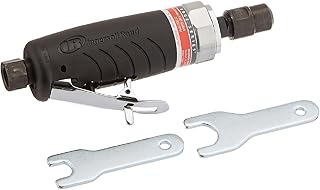

A Makita Corded Die Grinder is a practical choice for Australian tradespeople, workshops, fabricators, maintenance teams and serious DIY users who need a compact rotary grinding tool. Unlike cordless models, a corded grinder connects directly to a suitable power supply, so you do not need to manage battery charge levels during longer sessions. This can make a mains-powered die grinder useful for workshop benches, fabrication areas and other locations with convenient access to power.
Makita's corded die grinder range includes models designed around different grinding requirements. For example, the GD0600 uses a 400W motor, a 6mm collet capacity and a no-load speed of 25,000 rpm. Makita lists a maximum wheel-point diameter of 38mm and a compact 358mm overall length for this model. These specifications illustrate why die grinders are useful when you need a high-speed rotary tool for controlled material removal rather than the broader grinding surface of an angle grinder.
When comparing Makita corded die grinders, start with the work you expect to perform. Collet capacity is important because it determines compatibility with suitable mounted points, burrs and other accessories. A 6mm or 6.35mm collet is common on compact die grinders, while larger models can offer greater capacity for particular applications.
Motor power and rotational speed also deserve attention. A compact model with a high no-load speed can suit detailed grinding and deburring, while a higher-powered model may be preferable when your application requires sustained material removal. Makita's corded range includes models with different power and speed characteristics, so compare the specifications of each product rather than choosing by brand name alone.
Check the required accessory shank size before purchasing. The collet must securely accept the accessory you intend to use, and the accessory must be rated for the operating speed of the grinder. Never assume that every grinding point or burr is compatible with every die grinder. Follow the tool and accessory manufacturer's instructions for maximum diameter, speed and safe operation.
Power ratings provide useful information about the motor, but they should be considered alongside no-load speed, intended application and tool design. A Makita GD0600, for example, is specified at 400W with a 25,000 rpm no-load speed. Makita also specifies a 38mm maximum wheel-point diameter for this model. These figures can help shoppers compare products according to the type of work they perform.
A corded die grinder can be useful for deburring sharp edges, smoothing suitable metal surfaces, cleaning up castings and carrying out detailed grinding in areas where a larger grinder may be difficult to control. The narrow body of a die grinder can also help when working around smaller features or confined sections of a workpiece.
For Australian workshops, common applications may include metal fabrication, automotive maintenance, engineering, restoration and general workshop finishing. Always select the correct accessory for the material and task. Use accessories that match the grinder's collet and speed requirements, and follow the manufacturer's operating instructions.
Corded operation can be particularly useful when you expect longer periods of continuous work in a workshop environment. There is no battery to recharge between tasks, and the tool remains connected to mains power while the cable reaches a suitable outlet. For fixed workshop areas where mobility away from a power source is not essential, this can be a straightforward setup.
On the other hand, cordless die grinders can be more convenient when you regularly move between work areas or work where mains power is unavailable. Consider your workspace, expected runtime, portability requirements and accessory needs before choosing between corded and cordless operation.
Grinding accessories can operate at very high speeds, so safe operation is essential. Inspect accessories before use and never fit damaged or unsuitable grinding points. Secure the workpiece properly, keep hands clear of rotating components and use appropriate eye and hearing protection. Follow the manufacturer's instructions for installation, operation and maintenance.
Keep ventilation openings clear and inspect the power cord, plug and tool body regularly. Disconnect the grinder from the power supply before changing accessories or performing maintenance. If you notice unusual noise, vibration, heat or electrical problems, stop using the tool and have it inspected by a qualified service professional.
When shopping for a Makita Corded Die Grinder in Australia, compare the product specifications against your actual workshop requirements. Focus on collet capacity, motor power, rotational speed, maximum accessory size, dimensions and weight. A carefully matched grinder and accessory combination can provide the control needed for detailed grinding, deburring and finishing work.
Review the available models in this category to find a corded die grinder that fits your application. Before ordering, confirm the product specifications, included accessories, electrical requirements, availability and delivery information shown for the individual product.
Find a Makita Corded Die Grinder for detailed grinding, deburring, finishing and workshop applications where a steady mains-powered tool can provide consistent performance. Corded die grinders are designed for precision work around metal and other suitable materials, particularly where compact access and high rotational speed are important.